


The natural gas market is entering a period of structural change. Years of price stability and ample supply have given way to accelerating demand, infrastructure bottlenecks, and static storage capacity. These converging factors are reshaping natural gas price trends for 2026 and posing fresh challenges for market participants.
Yes Energy interviewed three industry experts to get their perspective on what's driving these changes and what market participants should expect: Eric Brooks, Manager of Americas Gas Pricing at S&P Global Energy; Dan Spangler, Senior Director of Analytics at Natural Gas Intelligence (NGI); and Maria Sanchez, Senior Analyst at IIR Energy. Their insights reveal a market at an inflection point—one where traditional balancing mechanisms are strained and where the path forward depends heavily on regional dynamics and infrastructure investment.

Regionality Will Continue to Drive Price Volatility
Regional infrastructure constraints are projected to remain a primary driver of natural gas price volatility in 2026, intensifying price disparities between regions with surplus production and those with limited pipeline access.
The Northeastern US is one of the clearest examples of how regional bottlenecks create significant price volatility. Limited pipeline capacity into New England exposes the region to sharp winter price spikes as local markets like Algonquin Citygate face spikes, while nearby Marcellus and Utica supply remains heavily discounted.
Infrastructure Investment Is Also Highly Regional
Pipeline expansion remains one of the clearest long-term solutions to regional gas price volatility, but future development faces growing economic, regulatory, and political complexity.
Many of the pipelines built during the shale revolution of the early 2000s were financed by producers seeking to move low-cost supply into higher-priced markets. “There was a very clear price signal for them to move gas from where it was very cheap and discounted to areas of higher prices, which was pretty much anywhere else besides the Northeast,” said Eric Brooks, Manager of Americas Gas Pricing at S&P Global Energy.
Today, however, he said it’s less clear who will fund new pipeline projects, particularly as utilities and generators face uncertainty around long-term contracting and cost recovery.
Beyond cost, project development is increasingly shaped by regional policy and permitting environments. “Building an intrastate pipeline in Texas is significantly easier than building a pipeline going through the Northeast,” Dan Spangler, Senior Director of Analytics at Natural Gas Intelligence (NGI), said, reflecting the widening divide between regions treating natural gas as a long-term strategic resource and those viewing it primarily as a transitional fuel.
Infrastructure developers are already responding to shifting demand patterns. Spangler highlighted expansion projects designed to move additional Permian supply west toward Arizona and California, as well as projects aimed at moving gas north into broader interstate pipeline networks.
Even in the Northeast, momentum is shifting. Williams' Northeast Supply Enhancement project moved forward with permitting, and the previously canceled Constitution Pipeline is again under debate. The pace and scale of future pipeline development will vary regionally, reinforcing that natural gas volatility in 2026 will remain highly localized.
Drivers of Demand: Data Centers and LNG
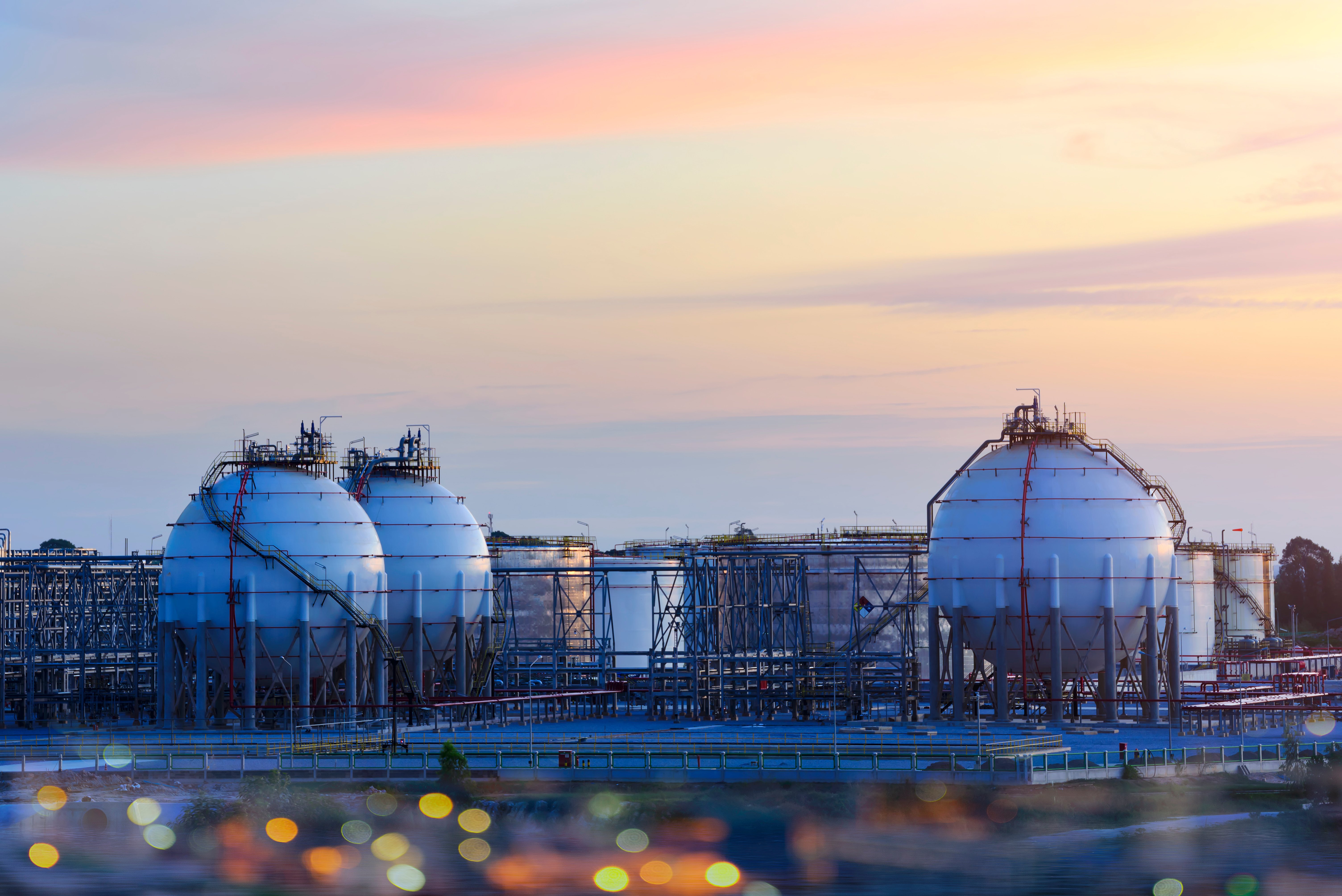
Liquefied Natural Gas (LNG) exports and data center development are both driving incremental natural gas demand growth, but they differ in scale and in how that demand interacts with the broader system.
LNG exports are expected to account for the larger share of demand growth through 2030, according to Brooks. “At S&P, we’re expecting power demand from data centers to grow by about 4 billion cubic feet (Bcf) by 2030, whereas LNG demand is expected to grow another 10-plus Bcf,” he said.
Maria Sanchez, Senior Analyst at IIR Energy, agreed. “We’re seeing a lot of infrastructure being built around LNG terminals,” she said, particularly in the Permian and Haynesville basins, which are supplying much of the LNG export growth.
Unlike LNG projects, which are supported by associated pipeline infrastructure and supply development, data center-driven demand often lacks vertical integration across supply, transport, and consumption. It is also geographically diverse, meaning development doesn’t always align with regions with low-cost gas supply.
“The cost of energy is only one factor for trying to figure out where to site a data center,” Spangler said. Developers must also consider fiber connectivity, water access, and proximity to population centers. If low-cost gas regions lack these additional infrastructure requirements, load centers may be placed in constrained regions, increasing congestion and price volatility.
The Role of Storage and Production
Storage remains a key mechanism for balancing seasonal and short-term fluctuations in natural gas demand.
“We haven't added much storage capacity in the past 10 or 15 years, while demand has almost doubled from 2010 levels,” Brooks said. “The scale of the market has grown significantly, and yet storage has been pretty much consistent and flat.”
“When you get those cold snaps, especially cold snaps that hit very large areas of the country, it can stress storage to its max,” Spangler said. He pointed to Winter Storm Fern (January 2026), which drove the largest weekly storage withdrawal on record and pushed prices higher as markets responded to tightening supply conditions.
While concerns around daily deliverability persist, he added that the market has not raised broader concerns about the industry’s ability to refill storage ahead of next winter.
Storage levels relative to the five-year average remain an important near-term price signal for the market. When inventories are below normal, prices tend to move higher, and when inventories are stronger, prices generally ease. Heading into winter 2026–27, the US Energy Information Administration (EIA) expects inventories to end October about 5% above the five-year average.
Alongside storage, growing shale production has increased the flexibility of the natural gas system and helped offset pressure during periods of extreme demand.
“There is definitely more reliance on gas production from shale plays, which are helping balance the market a lot,” Sanchez said. She added that the flexibility of shale supply has helped reduce the large seasonal price spreads that historically created stronger incentives for storage expansion.
Extreme winter weather continues to test the resilience of major producing regions. During Winter Storm Fern, freeze-offs in the Permian, Haynesville, and Marcellus-Utica basins temporarily constrained regional supply as demand surged. Freeze-offs occur when extreme cold causes liquids or moisture in wells and pipelines to freeze, disrupting the production or flow of natural gas.
Still, impacts were less severe than during Winter Storm Uri. Spangler said that winterization efforts after the 2021 storm have helped reduce production losses and avoid cascading failures.
Even with these improvements, Fern reinforced that production resilience alone cannot fully offset simultaneous supply disruptions and demand spikes, underscoring the continued importance of storage in balancing the market during extreme weather events.
Natural Gas Price Outlook: What’s Ahead for the Next Five Years
After years of relative stability, the natural gas price outlook shows the market is approaching an inflection point driven by a fundamental mismatch: demand growth is accelerating, while supply response remains uncertain.
The challenge isn't geological. "We have a lot of gas in the ground, but they also need the economics to bring it up," Sanchez said. Current prices may not be sufficient to incentivize production growth where it's needed most.
While Permian associated gas production continues regardless of natural gas prices, meeting incremental demand requires supply growth from dry gas plays like Haynesville. "I don't think this $3.50, $4 environment is enough that producers are really jumping to pull more gas out of the ground there, and that's where we really need to see more production to meet this demand," Spangler said.
Since then, Haynesville output has picked up. EIA expects it to grow about 9% in 2026, helping push US production to a record 122.5 billion cubic feet per day (Bcf/d).
This supply-demand imbalance is compounded by the market's diminishing capacity to absorb volatility. With the "dramatically increased demand and static storage, the ability of storage to ease that seasonal and daily deliverability buffer is a bit diminished," Spangler said. "And so, I think it's likely that we continue to see a lot of volatility in gas prices."
Brooks expects about 350 Bcf of additional incremental storage capacity in the next decade, mainly from depleted reservoirs. High-cycle salt dome storage on the Gulf Coast will remain important for managing rapid demand swings, especially in regions tied to LNG flows.
In the near term, record production has kept prices in check. EIA projects Henry Hub will average about $3.43/MMBtu in 2026 and $3.28 in 2027. But the outlook for the next three to five years remains cautiously bullish. "We're seeing demand. It's starting to materialize with LNG and data centers, but we're not seeing the production push," Sanchez said. "So, there's going to be an imbalance which is going to help lift prices, and then production will have to catch up."
While Brooks doesn’t expect $10 gas, he does expect prices will likely settle at moderately higher levels “because we have this higher base load of demand and we're running out of places to get more gas from and build more pipelines.”
For market participants planning around these trends, Spangler cautioned against relying solely on forward curves, particularly in regional markets. "It's important to look at the volatility both in the forward curve and the volatility in the daily prices, especially when you're looking in a region to see how volatile it is. It's not just that one number. There's a lot of gray area above and below what that number is."
Coal’s Limited but Persistent Role
Coal-fired generation is expected to remain a modest contributor to the power stack, particularly during periods of high natural gas prices. "Last year we saw coal eat into some of the gas demand for power just based on price signals," Spangler said, noting that in certain regions and timeframes, economics can favor running coal generators over gas.
The trend has influenced retirement timelines. "We definitely see retirements slowing down because coal can help with the base load," Sanchez said. However, she added that coal's share of the generation stack is no longer as significant as it once was.
Brooks noted the economics remain situational: "If gas prices are hugely volatile, if you've got $100 gas in certain markets, then sure, I think coal probably seems like a good option, but I don't know [about the] long-term durability of that trend."
Renewables: Growing but not Displacing
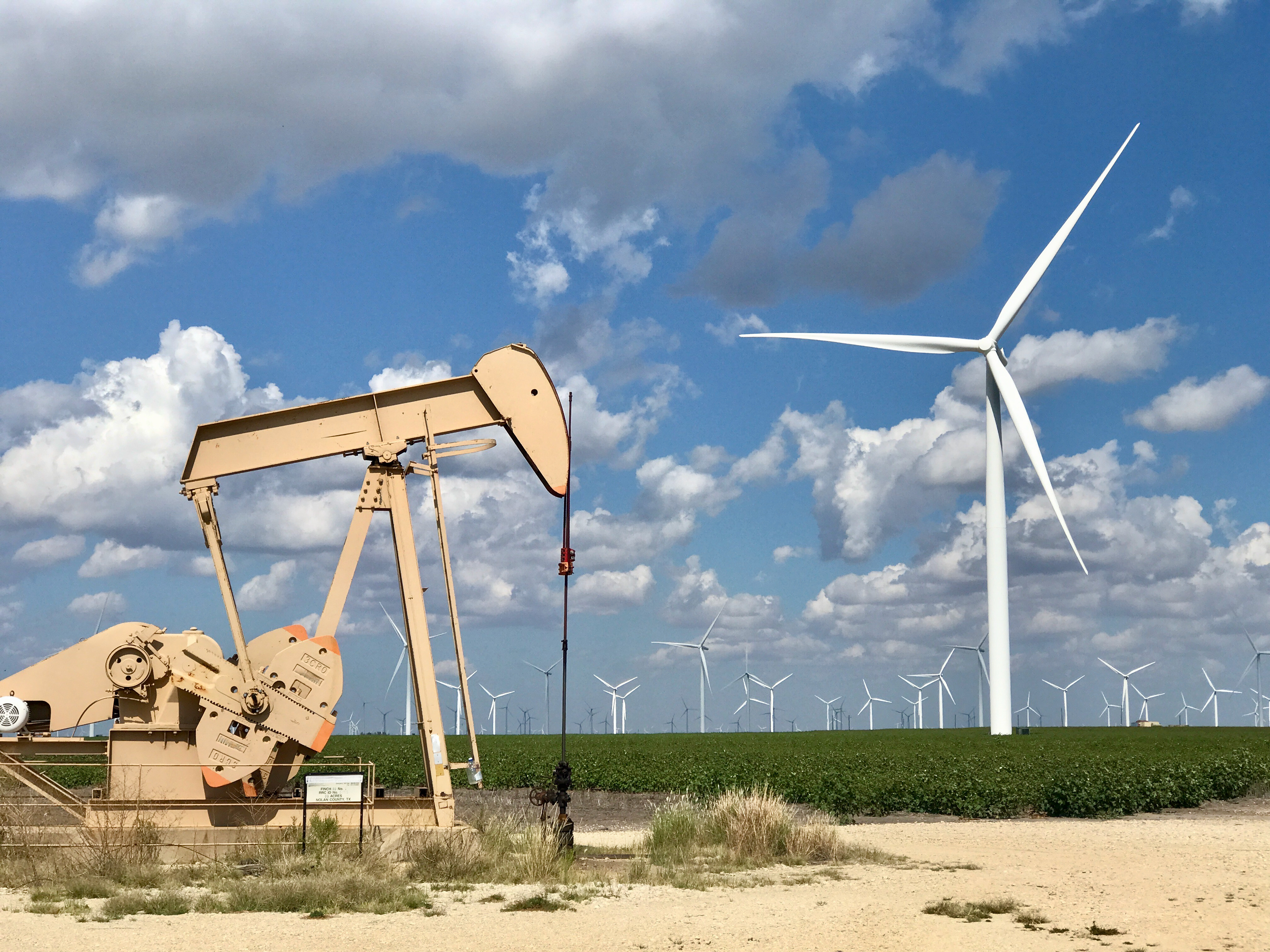
Renewable energy development will continue, though the pace of growth may moderate in the coming years. "Once a lot of the subsidies expire, then it gets really expensive to produce a lot of the renewable sources compared to gas," Sanchez said.
Regional policy will continue to drive renewable deployment in certain markets, including Colorado and California, which have renewable energy mandates. “A lot of those utilities are relying on wind and solar and then battery to support those data centers as opposed to gas," said Sanchez.
Still, the intermittent nature of renewables ensures natural gas will maintain a key role in the grid. "If we get a lot of demand coming on and renewables and batteries can't meet it, then gas is a natural place to step in," Spangler said. "But similarly, if data centers turn out to be a bust, and the demand is way lower than what people are expecting, then I would expect renewables and batteries to potentially significantly eat into gas's share of the market."
Staying Ahead of Natural Gas Market Trends
Natural gas market trends indicate a new era defined by tighter fundamentals and persistent volatility. The longer-term outlook points toward moderately higher prices and sustained volatility as supply works to catch up with accelerating demand. Regional infrastructure constraints will continue to drive price dislocations, while LNG exports and data center growth will create new baseload demand that current production economics may not fully support. With storage capacity static despite demand dramatically increasing since 2010, the market's ability to absorb shocks has diminished.
Contact Yes Energy to learn how to access NGI, IIR, and S&P Global Energy data through our products and stay ahead of market trends.

Meet the Author



.png?width=380&name=NEISO%20Backed%20into%20a%20Corner%20Whitepaper%20%20(1).png&format=auto&upscale=false)