
Skip to content

Power System Modeling Software

Explore What Could Happen. Decide What Comes Next.

Please select an image or video
40+ years of modeling expertise
1,000's of scenarios supported through cloud-scale execution
20+ year hourly market forecasts
17 states rely on EnCompass for regulatory filings

Load growth. Resource retirements. Transmission expansion. Policy changes. Fuel prices. Storage. Each assumption can reshape long-term market outcomes. But many organizations still face a tradeoff: ready-to-use forecasts with limited visibility into the underlying assumptions, or sophisticated models that require extensive preparation and workflow management. 

Yes Energy's power system modeling software gives utilities, developers, investors, and market participants a better way to understand what could happen in electricity markets before deciding what to do next.

Understand More Before You Decide

Find the Right Electricity Market Modeling Solution

Whether you need ready-to-use nodal market intelligence, detailed site analysis, or direct control over model assumptions and scenarios, Yes Energy helps you find the right approach for your decision.

Model Portfolio and Market Futures at Scale.

 Bring capacity expansion, production cost modeling, and embedded powerflow together in one modeling environment. EnCompass helps teams plan future resource portfolios and analyze how market and transmission conditions could shape outcomes across zonal and nodal markets. 


  • Plan and compare resource portfolios for integrated resource planning, resource adequacy, and investment analysis
  • Build customized market outlooks by controlling assumptions and running your own models
  • Analyze congestion, transmission constraints, and project impacts
  • Test load, fuel, policy, technology, and portfolio assumptions
  •  Run extensive simulations in parallel, with cloud and on-premises deployment options
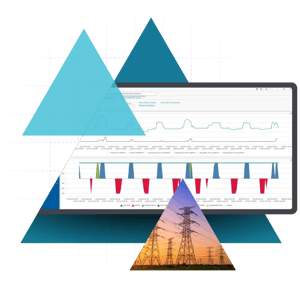
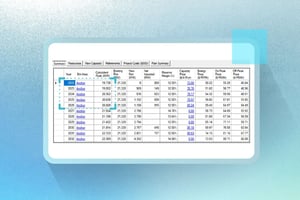
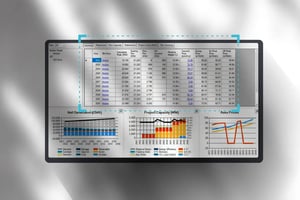
EnCompass capacity expansion and production cost modeling interface

Understand Long-Term Value at the Node.

Evaluate locations, assets, and portfolios using nodal market history, infrastructure intelligence, benchmarking, and fundamentally modeled long-term forecasts. GridSite helps teams understand the market dynamics that could shape future asset value.


  • Analyze long-term nodal price and congestion outcomes
  • Compare three forecast scenarios, updated quarterly
  • Run extensive simulations in parallel
  • Analyze nodal prices and marginal emissions produced by the same model
  • Connect LMP and marginal emissions insights
  • Investigate the assumptions behind the forecast
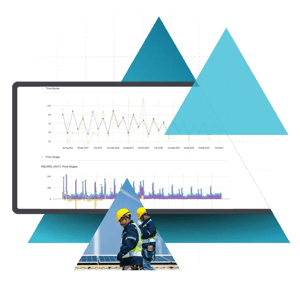
GridSite long-term nodal price forecast and scenario comparison

Power System Modeling Without the Traditional Compromises

Model-ready nodal market data and historical pricing in Yes Energy
Data and Modeling, Connected.

Start with trusted, model-ready market data and spend less time building and maintaining the inputs required for analysis.

Documented forecast assumptions and methodology behind long-term nodal prices
Transparent by Design.

Understand the assumptions, inputs, and market mechanisms behind the results so your analysis can stand up to internal, regulatory, and stakeholder scrutiny. 

EnCompass running multiple scenarios in parallel to compare market outcomes
Built to Explore at Scale.

 Run more scenarios, examine more uncertainty, and make it practical to investigate more planning questions beyond a handful of base cases.  

EnCompass zonal and nodal analysis with embedded powerflow in one platform
Designed for Real Market Complexity.

Move from zonal planning to detailed nodal analysis while modeling energy, ancillary services, capacity, storage, hybrid resources, demand response, and transmission constraints. 

Built Around the Decisions You Need to Make

Trusted for Long-Term Decisions

More Resources for Modeling

Frequently Asked Questions on Modeling Solutions

What is power system modeling software?

Power system modeling software helps organizations analyze how changes in demand, generation, transmission, fuel prices, policy, and other assumptions could affect future market and grid outcomes. These platforms can combine energy market simulation, capacity expansion, production cost modeling, powerflow analysis, and scenario planning to support long-term decisions. 

What is the difference between EnCompass and GridSite?

GridSite is forecast-led. It provides ready-to-use nodal market history, long-term forecasts, infrastructure intelligence, and benchmarking for teams evaluating sites, assets, and market opportunities.

EnCompass is modeling-led. It gives teams direct control over assumptions so they can build, modify, and run their own capacity expansion, production cost, and powerflow scenarios.


EnCompass

GridSite

 Approach

Modeling-led. Build, modify, and run your own capacity expansion, production cost, and powerflow scenarios.

Forecast- and analysis-led. Start with a ready-to-use nodal forecast, backed by market history, infrastructure intelligence, and benchmarking.

 Model ownership and control

Your planning or modeling team. You control the inputs, assumptions, and scenarios.

Yes Energy’s market analysts. You explore the results and trace the documented assumptions, with no modeling required.

 Main outputs

Scenario-specific market prices, resource portfolios, dispatch, costs, emissions, congestion, and curtailment results

Hourly nodal prices (LMPs) and marginal emissions from the same model, plus nodal market history and congestion.

 Forecast horizon

Set by your study, from near-term production cost runs to multi-decade capacity expansion plans.

20-year hourly outlook with three scenarios, updated quarterly.

 Zonal or nodal detail

Both. Move from zonal planning to detailed nodal analysis in one connected workflow.

Nodal. Modeled at the node, not regressed from a zonal average.

 Best fit

Utilities, IPPs, and consultants with in-house modeling teams working on integrated resource planning, transmission planning, resource adequacy, and regulatory filings.

IPPs evaluating sites, who want a defensible forecast without building and maintaining a model.


What long-term market forecasts are available in GridSite? The Nodal Forecast provides a 20-year outlook of hourly nodal prices. It includes three scenarios updated quarterly, with nodal LMP and marginal emissions results produced by the same model. Documented assumptions and methodology help users understand what is driving the forecast.
How does EnCompass support long-term energy planning?

EnCompass supports integrated resource planning, generation and transmission planning, portfolio strategy, resource adequacy, and regulatory analysis. It brings capacity expansion, production cost modeling, and embedded powerflow together so teams can evaluate how different assumptions affect resource needs, market operations, costs, and transmission outcomes.

Can Yes Energy support both zonal and nodal analysis?

Yes. EnCompass supports connected zonal and nodal modeling workflows, allowing teams to move between broader market planning and detailed grid analysis. GridSite provides ready-to-use nodal history and long-term forecasts for evaluating specific locations and assets.

How transparent are Yes Energy’s forecasts and models?

GridSite provides documented forecast assumptions and methodology, supported by quarterly analyst review. EnCompass gives modeling teams visibility into and control over model inputs, assumptions, and scenarios. This transparency helps users understand what is driving the results and explain their analysis to regulators, investors, lenders, and other stakeholders. 

Can EnCompass support large-scale scenario analysis?

Yes. EnCompass is designed to run multiple simulations in parallel and make broader scenario exploration practical. Cloud-scale execution allows teams to move beyond a few base cases and investigate how combinations of load growth, resource changes, transmission development, fuel prices, policy, and other assumptions could reshape future outcomes.

Is EnCompass available in the cloud and on-premise? Yes. EnCompass supports both cloud and on-premise deployment. Cloud deployment enables scalable scenario execution, workflow automation, and easier collaboration, while on-premises deployment supports organizations that require greater control over their modeling environment.
What is electricity market modeling? Electricity market modeling simulates how generation, demand, storage, transmission constraints, and market rules interact under different assumptions. It helps estimate dispatch, electricity prices, congestion and curtailment. Organizations use it to support long-term price forecasting, resource planning, project siting, and investment analysis.
What is the difference between power system modeling and electricity market modeling? Power system modeling covers how electricity systems are planned and operated, including physical grid performance, reliability, and economics. Electricity market modeling focuses on how resource costs, transmission constraints, and market rules shape dispatch, prices, and asset revenues. EnCompass connects capacity expansion, production cost modeling, and embedded power flow so teams can evaluate how resource decisions and transmission constraints affect portfolio costs and market outcomes.
Who uses power system modeling software? Utilities use power system modeling software to support integrated resource planning, evaluate transmission constraints, assess resource adequacy, and prepare regulatory filings. Developers and independent power producers (IPPs) use it to compare project locations and evaluate long-term asset value. Financial institutions use it to test investment assumptions, while consultants use it to support planning, market studies, and investment analysis for clients.

The Best Energy Decisions Aren’t Predicted. They’re Explored.

See how Yes Energy can help your team understand uncertainty, explore meaningful scenarios, and make more informed long-term decisions.