
Today’s energy market simulation software is expected to answer increasingly complex questions about system behavior, asset value, and operational risk. Meeting those demands requires high-resolution analysis and tight coordination across resources, transmission, and market mechanisms.
The foundational design choices behind a platform—how it models resources, constraints, and system interactions—directly influence how confidently users can evaluate asset value, system behavior, and market outcomes. Some platforms excel at specific analyses but require additional tools, workarounds, or simplifying assumptions to complete the picture. Others struggle to scale, forcing users to segment systems that are, in reality, deeply interconnected.
Platforms such as Yes Energy’s EnCompassTM illustrate how integrated, well-designed modeling can support both detailed operational insight and long-term investment planning.
For organizations evaluating energy market simulation software, these are the capabilities that matter—and why they matter.
An Integrated View of Resource and Transmission Expansion
A critical capability for any modern modeling platform is its ability to represent the interaction between generation and transmission decisions across time and space. Modeling these elements independently can create blind spots: the impacts of new generation on congestion may be underestimated, and opportunities unlocked by transmission upgrades may be overlooked.
An integrated platform captures these dynamics within a single, consistent framework, reflecting how real power systems actually develop—as a continuous negotiation between supply and demand. It allows analysts to evaluate how resource and transmission choices interact, how constraints emerge, and how the system evolves across multiple scenarios.
This eliminates the need to stitch together insights from multiple tools or rely on assumptions about how one system will react to another. Platforms that deliver this level of insight enable more accurate long-term planning, better risk assessment, and higher confidence in decision-making.
True Optimization Instead of “Good Enough” Solutions
The solving methodology at the heart of a platform directly affects the reliability and usability of its outputs. Some platforms rely on heuristic approaches—methods that produce solutions that are “close enough” based on rules of thumb, then move on hour by hour. While these approaches can be faster in some instances, they don’t guarantee the best possible solution across the entire simulation horizon.
A platform with true optimization looks ahead and considers how decisions made in one moment affect outcomes later.
For example, it accounts for the fact that using a battery now limits its availability later or that starting a thermal plant early may reduce costs in the short term but create inefficiencies in subsequent hours. By evaluating these tradeoffs over time, the platform finds the system-wide strategy that makes the most effective use of resources, rather than settling for approximations.
For analysts, this approach provides confidence that the results accurately reflect both operational realities and investment implications, supporting informed decisions at every level.
Large-Footprint Modeling Without Artificial Boundaries
Power systems don’t operate in isolation. Interregional flows shape prices, congestion, and reliability across market seams.
A modern energy simulation software should be able to model large interconnected systems—such as an entire interconnect—in a single simulation. When models are constrained to smaller, regional footprints, analysts must approximate interregional interactions, which increases complexity and the potential for error.
Platforms that support large-footprint modeling capture interconnections directly, providing a more accurate and defensible view of system behavior. This capability is critical for capturing the actual dynamics of power flows and ensuring analyses reflect operational realities.
Sub-Hourly Resolution That Reflects Market Reality
As markets evolve, value increasingly exists in the margins—often within minutes, not hours. This is especially true for ancillary services and fast-responding assets, such as batteries.
A modern modeling platform must support sub-hourly resolution, with flexible time increments that allow users to match the granularity of the question they’re trying to answer. Being able to model five-minute or even one-minute intervals fundamentally improves a system’s ability to represent price spikes, reserve deployment, and short-duration dispatch decisions.
This level of detail is essential for:
- Evaluating ancillary service opportunities
- Understanding storage dispatch behavior
- Capturing short-lived congestion or scarcity events
Without sub-hourly modeling, these dynamics are either averaged away or missed entirely, leading to an underestimation of both risk and opportunity.
Ancillary Service Pricing As a Standard Output
For many assets, ancillary service markets are a primary source of revenue and a critical element of operational strategy.
A modern modeling platform should produce ancillary service prices—such as regulation and spinning reserves—as a standard part of its output. When these values are available without additional manual input or significant runtime penalties, analysts can incorporate them seamlessly into asset valuation, operational analysis, and long-term planning.
Fuel Price Granularity That Improves Accuracy
Fuel costs strongly influence dispatch decisions and market outcomes. Platforms that allow daily fuel price inputs enable analysts to capture short-term volatility and better align costs with operational decisions.
By contrast, platforms limited to monthly averages may obscure meaningful variations, reducing the accuracy of dispatch simulations and price forecasts. Granular fuel pricing ensures model outputs better reflect the operational and economic realities of the system.
Detailed Combined-Cycle Modeling
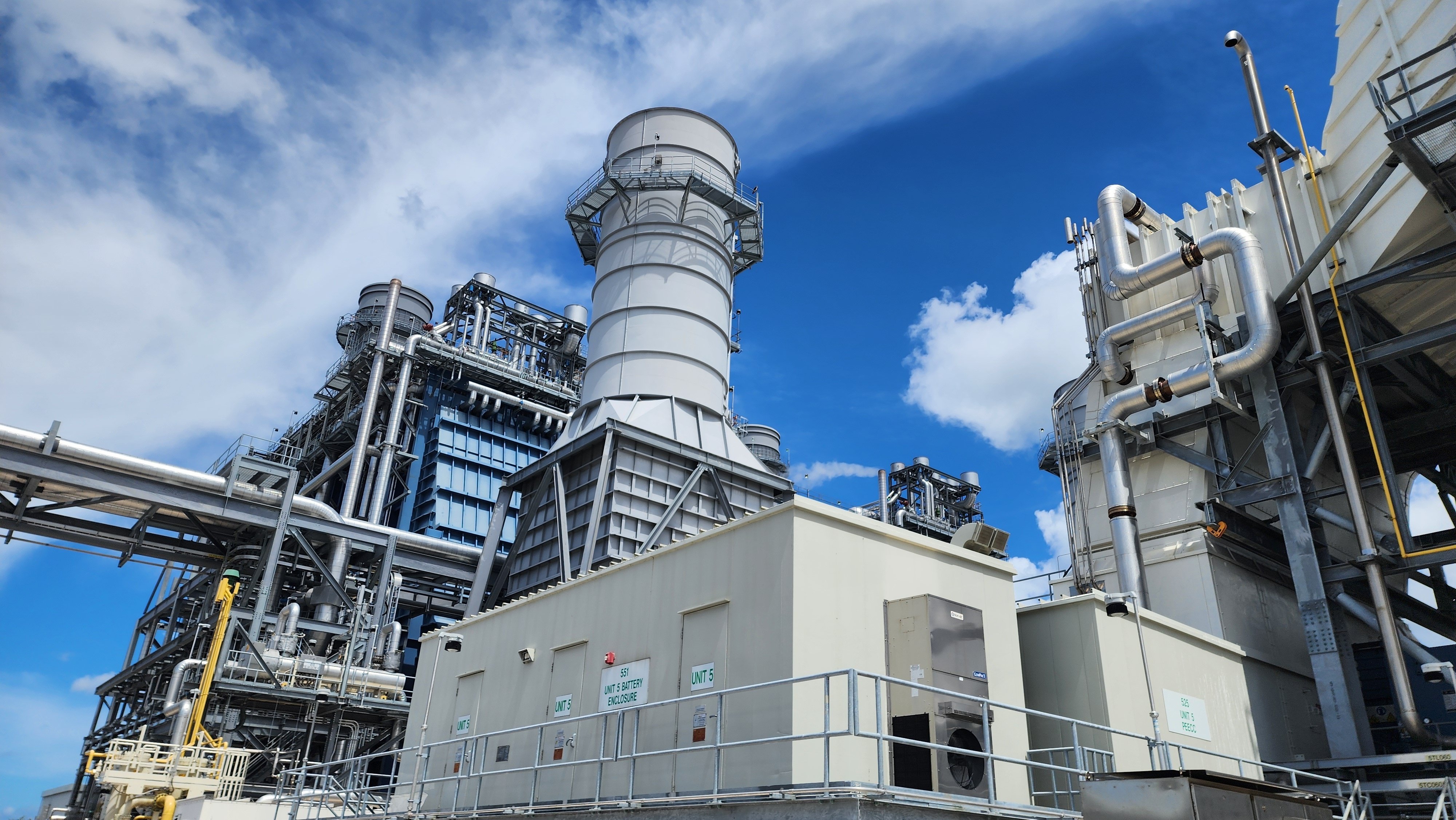
Combined-cycle plants don’t behave the same way under all conditions. Startup costs and operational constraints vary depending on how long a unit has been offline, and these differences matter when modeling dispatch and system costs.
Simplified approaches that treat all startups uniformly sacrifice accuracy, potentially underestimating costs or overstating operational flexibility. However, a platform that supports detailed combined-cycle modeling—including distinctions between hot, warm, and cold starts—provides a more realistic representation of system flexibility and costs. As systems rely more heavily on flexible thermal resources to balance renewables, this level of detail becomes increasingly valuable.
Storage Logic Built for How Batteries Actually Operate
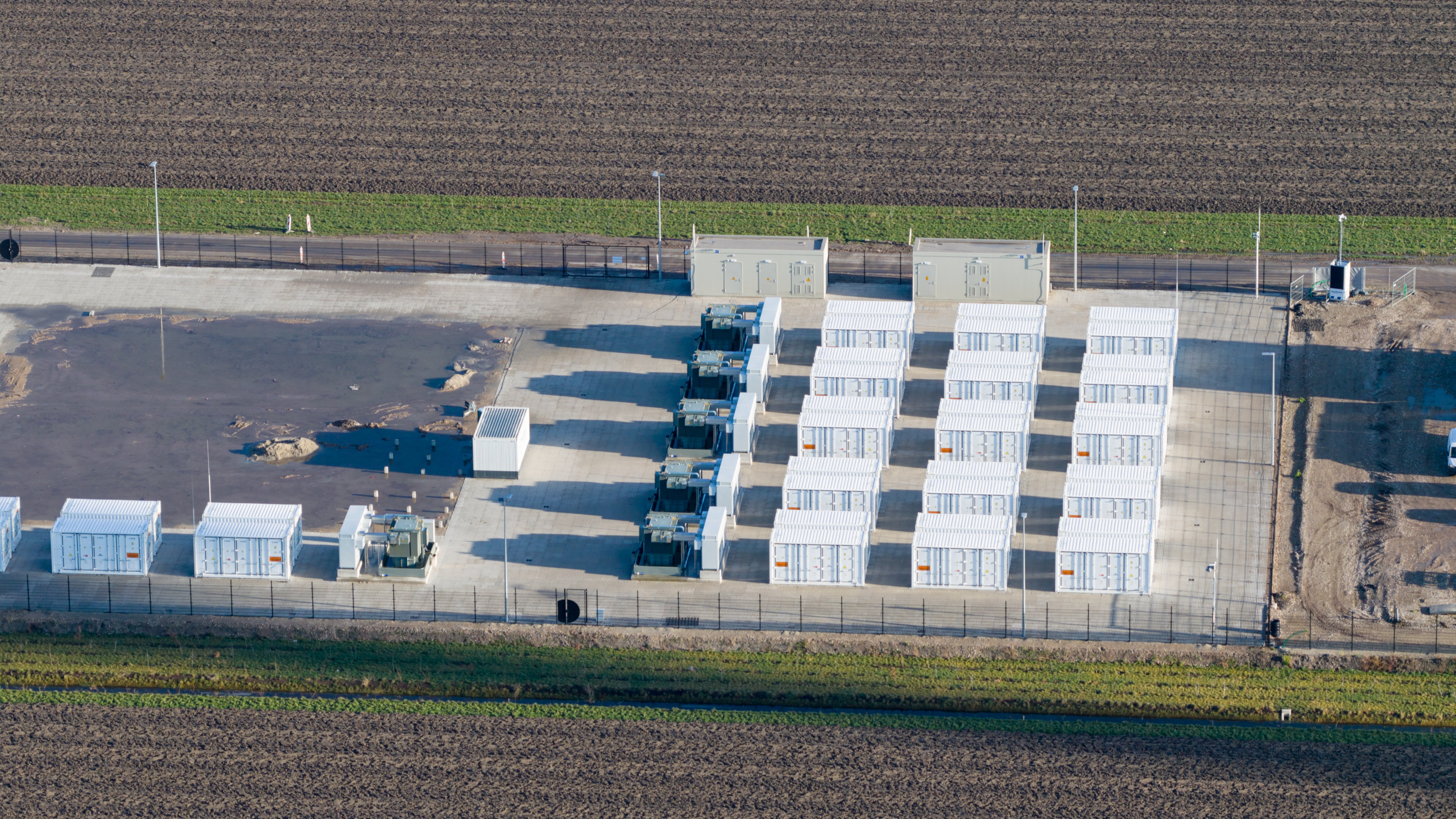
Battery storage behaves differently from traditional pumped hydro. Accurate modeling requires logic specifically designed for batteries, including configurable parameters for charging, discharging, and market participation.
Platforms with flexible storage logic allow analysts to explore multiple operational strategies, understand interactions with congestion and prices, and assess contributions to ancillary services. This flexibility ensures that storage is accurately represented as a core driver of system behavior and value.
Granular Outage Modeling for Generation and Transmission
Outages—both planned and unplanned—shape market outcomes. A robust modeling platform must allow users to represent this reality with precision.
This includes the ability to model:
- Forced outages and scheduled outages
- Outages on both generation and transmission assets
- User-defined outage rates or explicit outage schedules
When analysts are limited in the way they can model transmission outages or when forced outages are excluded entirely, results can systematically underestimate congestion and reliability risk. Comprehensive outage modeling ensures simulations reflect how systems behave under stress, rather than smoothing over risk with overly simplistic assumptions.
Data Quality Rooted in Scrutiny, Not Scraping
Even the most sophisticated model is only as good as the data behind it. High-quality modeling platforms rely on data that is not merely collected but actively scrutinized. This means validating sources, checking for inconsistencies, and applying expert judgment to ensure the data reflects reality.
When data is treated as a commodity—scraped, loaded, and moved along—errors can propagate silently through the model. A rigorous validation process, informed by decades of market experience, significantly reduces this risk.
/Encompass/hd-encompass.webp?width=789&height=750&name=hd-encompass.webp)
Embedded Analysis Tools That Deliver Insight, Not Extra Work
Some modeling platforms rely on third-party applications for diagnostics, parallel processing, reporting, or detailed power flow analysis. Each additional tool brings extra licensing costs, learning curves, and workflow complexity, creating friction and slowing analysis.
A platform with fully embedded capabilities eliminates these barriers. For example, native power flow and constraint analyses enable analysts to calculate generator shift factors, evaluate source-to-sink impacts, automatically detect contingencies, and quantify congestion—all without leaving the platform. Built-in tools also support scenario management, parallel simulations, and comprehensive reporting, so analysts can explore results without reformatting data or stitching together outputs from multiple applications.
By integrating these features, the platform transforms modeling from a static exercise into an interactive, iterative exploration of system behavior. Analysts can drill into specific days, test multiple scenarios, and uncover insights efficiently. The result is streamlined workflows and greater confidence in decisions—whether for operational planning, market analysis, or long-term investment strategy.
Reporting That Matches the Scale of the Problem
Power market simulations generate massive datasets. The value of that data depends on how easily it can be explored, aggregated, and reused.
Strong reporting capabilities allow users to examine results across long time horizons and multiple dimensions without artificial constraints. When outputs are accessible in consistent formats, users can quickly pivot from one question to another—testing sensitivities, validating assumptions, or preparing downstream analyses.
Equally important is the ability to reuse outputs as inputs. When a platform’s input and output structures align, results from one run can immediately become the starting point for the next. This creates a more iterative, exploratory modeling process—and eliminates the time-consuming data cleanup that often slows analysis.
Visual Tools That Make the Grid Understandable
Interactive visualization tools allow analysts to see the physical network—substations, buses, and transmission lines—while dynamically exploring power flows, constraints, and congestion patterns. Visualizations can highlight overloads, show source-to-sink relationships, and provide multiple perspectives on system behavior, enabling users to investigate both operational and strategic questions.
By offering different ways to visualize the grid and its dynamics, these capabilities make complex networks more understandable, accelerate diagnostics, and help users translate model outputs into actionable insights.
A Platform Designed for Usability
Sophisticated doesn’t have to mean difficult. A well-designed modeling platform allows experienced users to become productive quickly, while remaining accessible to new users. Intuitive workflows, sensible defaults, and integrated support reduce the learning curve and reliance on external assistance.
Likewise, implementation support is essential to getting a platform running effectively. Providers that include installation assistance, data loading, and training as part of their offering remove friction, reduce total cost, and accelerate adoption, laying the foundation for long-term success.
Choosing a Platform That Reflects Today’s Grid
As markets become more granular, more constrained, and more interconnected, modeling platforms must reflect those realities—or risk introducing uncertainty when confidence matters most.
Yes Energy’s EnCompassTM provides a comprehensive approach, combining full operational detail with the flexibility to simplify constraints for long-term planning. The platform supports consistent optimization across time horizons—from short-term scheduling and trading to long-term capital investment—and integrates transmission constraints, ancillary services, and real-world operating costs. This ensures that results reflect how the system actually behaves, not how it is assumed to behave.
Ultimately, the value of a modeling platform is not defined by the length of its feature list but by how faithfully it represents today’s grid and how confidently its results can guide operational and investment decisions.
EnCompass aligns these capabilities with the analytical demands of a transitioning power system, helping organizations plan, forecast, and invest with clarity as markets continue to change.
See how to find the best modeling software for your needs.

Meet the Author