


Market dynamics are facing increased uncertainty as the Electric Reliability Council of Texas (ERCOT) load growth estimates skyrocket.
Meanwhile, growing capacity and a changing generation mix are creating unique market scenarios.
1. High Load Growth Forecasts
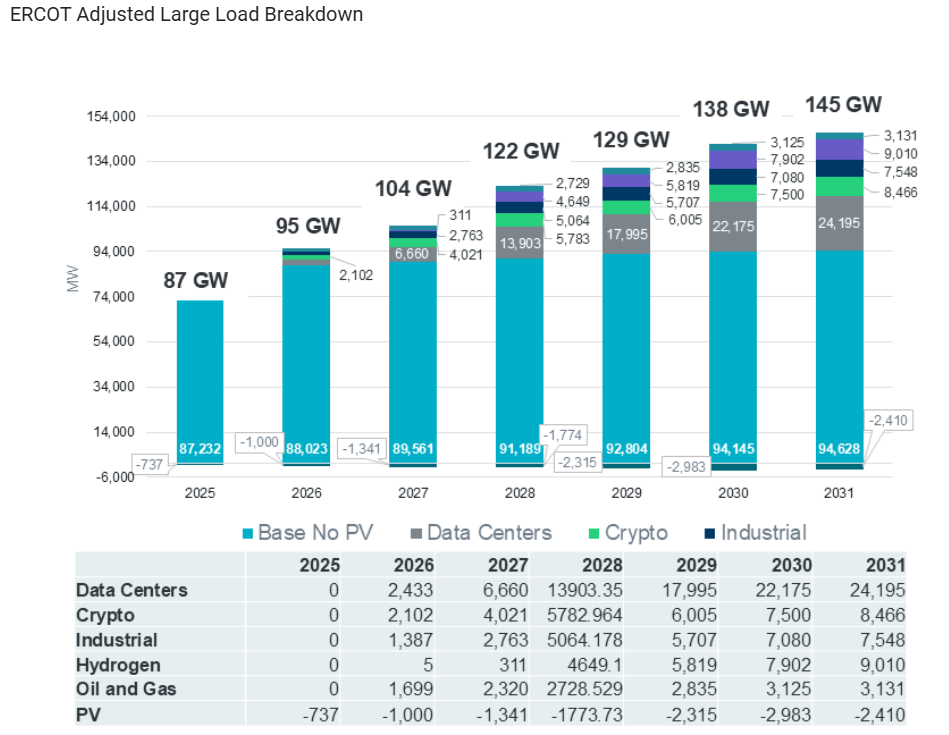
ERCOT's adjusted peak load growth forecast projects a 138 GW peak by 2030.
Source: ERCOT
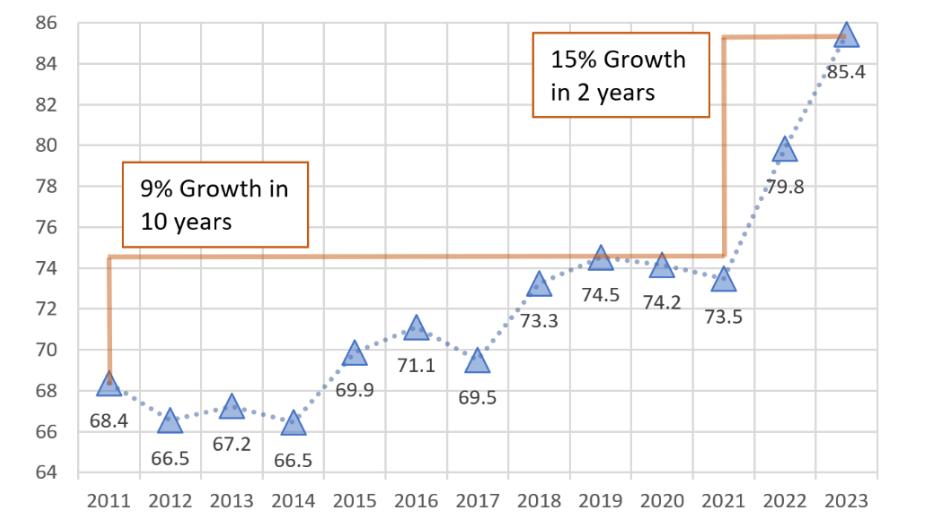
ERCOT saw peak demand grow 15% from 2021-23, but that pace cooled the last two years, with peak load dropping year over year in 2025.
Source: ERCOT load data via Yes Energy solutions
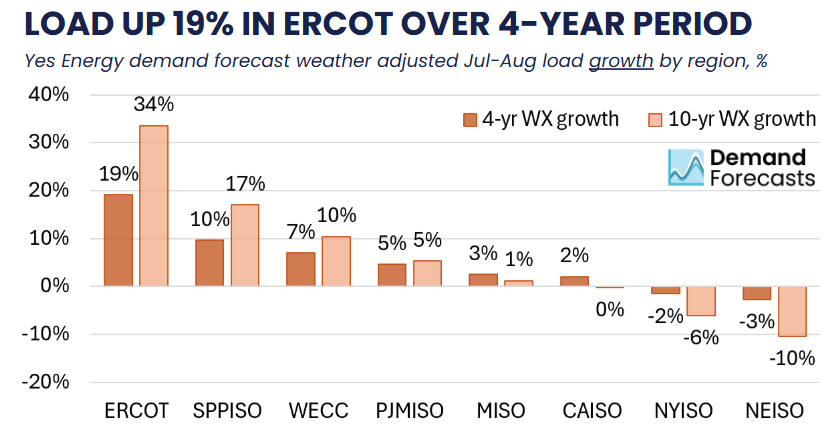
While peak load dropped, base load is still growing in ERCOT according to Yes Energy's weather-adjusted load forecasts. For context, base load is rising across most ISOs outside of the Northeast.
Source: Yes Energy Demand Forecasts
Enter uncertainty. How should market participants navigate the wild, wild west when it comes to large load interconnection queues, hard-to-comprehend projections, and mixed signals in reported actuals on peak and base load growth?
Yes Energy has a couple of proprietary, in-house datasets that help shed light on these projections. Our demand forecasts look one year into the future and include weather risk and weather decomposition to see what base load looks like and what temperature steps or weather phenomena are needed to hit ERCOT’s 95 GW peak load forecast for 2026 (as of ERCOT’s most recent long-term load forecast).
For more than one year forward, we have long-term infrastructure tracking data at Yes Energy, which helps show all projects in the queue, details which stage of development they're in, and helps “adjust” ERCOT’s large load breakdown in the forward-looking view.
Why Is Everyone Talking about ERCOT Load Growth?
Electric demand growth is already here, boosted by the surge in data center growth (with more planned).
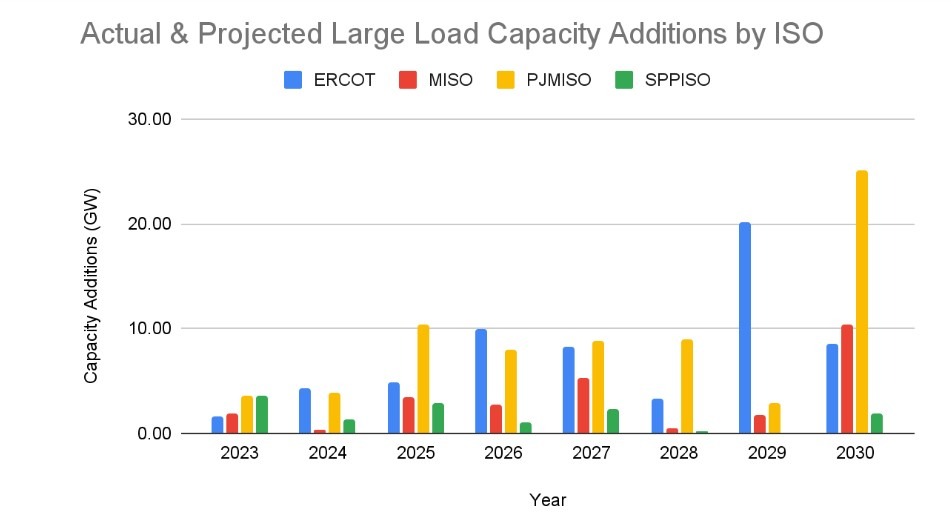
ERCOT starts 2026 with more than 233 GW of interconnection requests in its large-load queue, up 269% from last year. While the queue includes commercial and industrial (C&I) demand, as well as hydrogen production facilities, data centers make up about 77% of interconnection requests.
Source: Yes Energy’s Infrastructure Insights
What’s Been Driving Historical ERCOT Growth?
Data centers, population growth, and oil and gas have played a part in boosting electricity demand.
Extreme weather events can also bring unpredictability in power markets. We previously dove into some historic ERCOT pricing and its drivers.
How Will ERCOT Continue to Meet Rising Demand?
Large loads create plenty of challenges for ISOs, including ERCOT.
Solar leads the way in growth since 2020, with about 100 GW of capacity added across the US.
ERCOT has added about 31 GW of solar since 2020 and could see an additional 47 GW of solar projected to come online by 2029. However, this would require a major increase in solar construction rates, and the ISO can’t count on solar for generation when the sun is down.
This is where batteries come in, with ERCOT and WECC seeing the largest share of new build projects. Solar has shifted the peak scarcity hour to sunset, when temperatures and demand are both still high. Increasing battery generation is helping offset large net load ramps that occur when close to 30 GW of solar is rolling off the system in ERCOT.
ERCOT tripled its battery capacity between 2023 and 2025. After the successful launch of ERCOT’s RTC+B, batteries could continue to win in Texas. ERCOT’s battery storage capacity is now approaching 17 GW, and even more is in the pipeline.
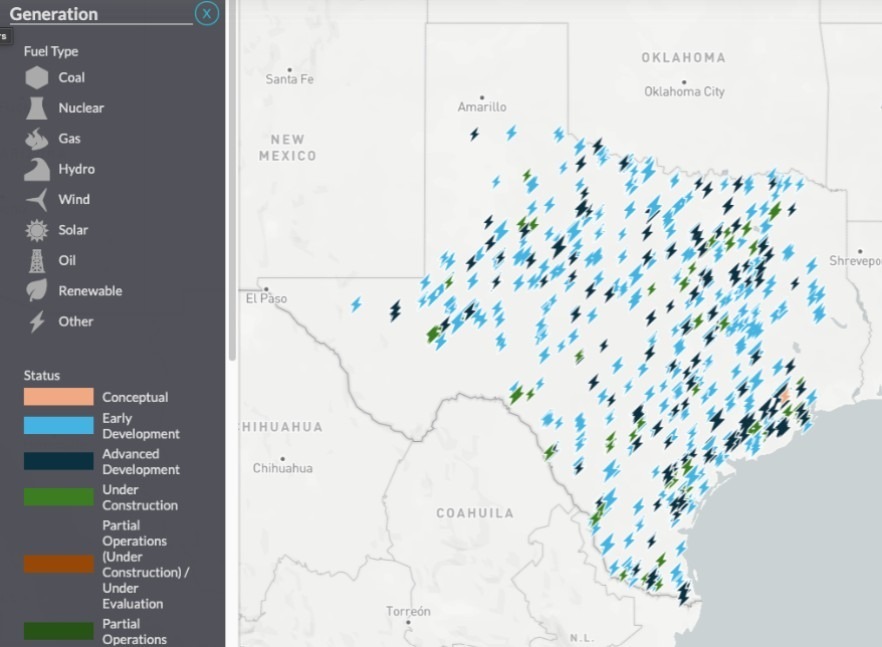
Source: Yes Energy’s Infrastructure Insights
ERCOT Load Can Also Be Flexible
Growth has reached a point where ERCOT has more than three GW of price-responsive crypto on the system. Other flexible load examples we see in Live Power include:
- Atlas Power in SPP (We previously watched it spark grid congestion.)
- Riot’s Rockdale Facility in ERCOT
- Beowulf Energy in NYISO
Conclusion
Large loads’ impact on the market is here, and ERCOT load growth isn’t stopping anytime soon.
How can you keep up?
Yes Energy has historical, current, and forward-looking data to help you navigate your positioning within the market.
You can now get quickly updated information about how large loads are operating with our Live Power solution. This real-time grid data includes large flexible loads (e.g., crypto facilities) and large non-flexible loads (e.g., data centers). It’s all delivered every 60 seconds from a network of proprietary, patented sensors.
Need an ERCOT load forecast? Check out our Demand Forecasts with advanced regression models use detailed demand and weather observation history and incorporate the latest near-term data to respond to changing weather patterns, extreme weather events, and holidays that might impact energy demand.
If you need to explore future scenarios, EnCompass can also help you predict ERCOT price trends.
Tap into Infrastructure Insights to see what’s coming in the ERCOT large load interconnection queue.

Meet the Author