
Energy Simulation Software
Understand What’s Ahead. Decide What’s Next.
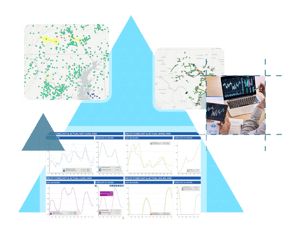




Power system planning teams face more uncertainty, more scenarios, and tighter timelines. Yet many modeling workflows still depend on disconnected tools, manual handoffs, and infrastructure that limits how many possibilities teams can practically explore.
EnCompass energy management simulatin software connects capacity expansion, production cost modeling, and powerflow in one platform, with model-ready data and flexible zonal-to-nodal analysis. Change the assumptions, run more scenarios, and understand how different choices reshape market outcomes before making high-consequence decisions.
/Branded%20Overlays%20for%20Banners/Branded%20Overlay%20-%20Product%20Shots%20-%20Solar%20Panels.png?width=300&name=Branded%20Overlay%20-%20Product%20Shots%20-%20Solar%20Panels.png)
The Right Fit for However You Plan
/Icons/icon-deploy-quickly.png)
Utilities & IRP Teams
Resource Planning · Transmission Planning · Power SupplyZonal analysis supports system level analysis, while nodal analysis reveals localized congestion and deliverability constraints. EnCompass unifies capacity expansion, production cost modeling, and embedded powerflow in one platform, so your team can evaluate resource and transmission outcomes in one platform.

IPPs & Developers
Development · Asset Management · CommercialBefore committing capital, IPPs and developers need to evaluate more opportunities and test how changing market and transmission conditions could reshape long-term asset value. EnCompass combines capacity expansion, portfolio analysis, nodal simulation, and embedded powerflow in one platform, so you can evaluate siting, congestion, curtailment and asset economics.
/Icons/icon-automate-bid-to-bill.png)
Financial Institutions
Infrastructure Investment · Portfolio ManagementTransparent, defensible analysis matters when every assumption can change the investment case. EnCompass helps teams test assumptions, compare scenarios, and understand how market and transmission conditions could reshape long-term asset value.
See it in Action
Explore the engine behind the EnCompass model by entering your information below, and unlock the interactive demo.
Trusted by the Teams Who Can’t Afford to Get it Wrong
Utility and planning teams, like those at Duke Energy, rely on the EnCompass model to accurately forecast the grid and account for changes and new technologies that impact their long-term outlooks. They know our team on a first name basis, and leverage our partnership and solutions to “provide the greatest value to their company.”
“We used to spend several man-hours in data processing time to extrapolate and manage data. Now our analysts can spend time doing more critical tasks.”
 ACESIndependent Power Producer
“The EnCompass model serves as the cornerstone of our analytical process. It allows us to navigate and make sense of a market that's evolving at extraordinary speed, helping us to anticipate changes and identify opportunities.”
 Arebise (Xiaogeng) DengSenior Fundamental Analyst, Linea Energy
“EnCompass has made it far easier to control our carbon footprint by providing visibility and insights. Because of the constraints and flow gates that enable us to watch what comes into Colorado, all we do is set the carbon limit and let the model run. We have yet to miss a target.”
 Tri-StateWholesale Power Supplier & Utility
Where Legacy Modeling Breaks Down and EnCompass Delivers
Built for How Modern Planning Teams Actually Work
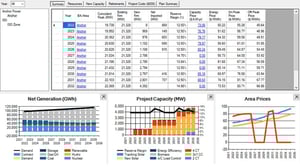
![EnCompass energy simulation software view showing zonal and nodal analysis in one platform]()
From Zonal to Nodal
Move from system-level planning to detailed nodal analysis within one connected modeling approach. Understand congestion, curtailment, and deliverability without rebuilding models across disconnected tools.
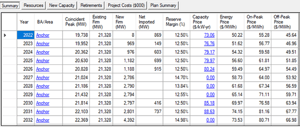
![Integrated resource plan (IRP) capacity report in EnCompass showing results across scenarios]()
Built to Explore at Scale
Run more scenarios, test more sensitivities, and investigate a broader range of possible futures without letting infrastructure constrain the questions your team can explore.
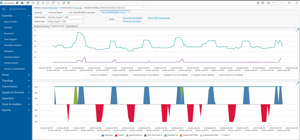
![EnCompass model results for energy, ancillary services, capacity, and storage]()
Designed for Real Market Complexity
Model energy, ancillary services, capacity, storage, hybrid resources, demand response, and transmission constraints with the detail complex planning and investment decisions require.
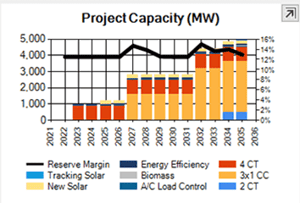
![EnCompass project capacity chart comparing outcomes across planning scenarios]()
Results You Can Explain and Defend
Review the inputs and assumptions behind your analysis, compare outcomes across scenarios, and understand the market mechanisms shaping the results. Build conclusions that are easier to validate, communicate, and defend.