Frequently Asked Questions
What is electric load forecasting software, and why does it matter?
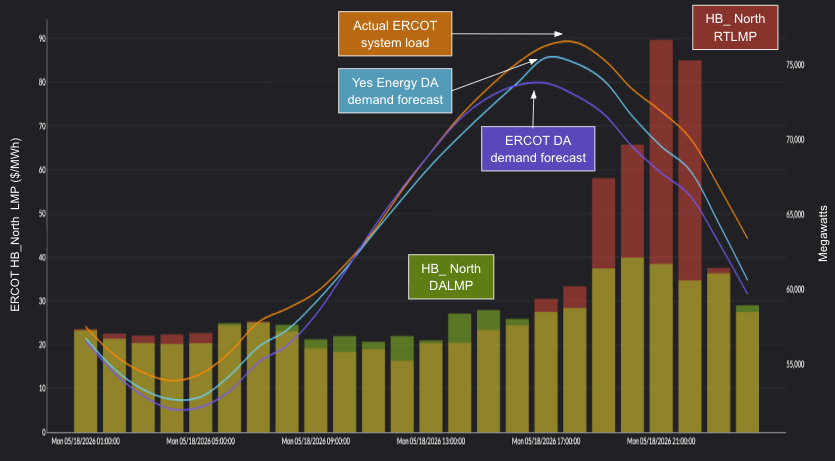
Electric load forecasting software estimates how much electricity a market, zone, or service territory will use, based on historical demand, weather forecasts, and calendar patterns. It matters because traders, utilities, and generators make bidding, procurement, and dispatch decisions off that number, and a miss in a critical hour can be expensive. Yes Energy Demand Forecasts delivers these forecasts with visibility into what's driving them.
What countries and regions does Yes Energy Demand Forecasts cover?
Yes Energy Demand Forecasts covers 35+ power markets worldwide. In North America, that includes the major markets including(CAISO, ERCOT, PJM, MISO, SPP, NYISO, NEISO, AESO, and IESO) plus SERC utility areas. In Europe, it covers 31 electricity markets and nine gas markets. In Asia-Pacific, it covers Japan (nine regions), Australia (seven states), and New Zealand (at the grid exit point level).
Who should use demand forecasts?
Anyone whose decisions depend on how much power a market will use. That includes real-time, day-ahead, and forward traders; utilities and load-serving entities (LSEs) that must meet customer demand; IPPs and asset managers who schedule and dispatch generation; and retail electricity suppliers. Teams without an in-house forecasting group can also lean on Yes Energy analysts.
What is short-term load forecasting, and how often are the forecasts updated?
Short-term load forecasting predicts demand from the next few hours out to roughly two weeks, driven largely by the latest weather forecasts. Yes Energy's short-term forecasts cover a 14-day horizon and update at least hourly (every half hour in APAC). Mid-range forecasts, from 15 days out to one year, update monthly using seasonal normal weather. Horizons vary by region.
How does the free trial work, and can I test accuracy before I buy?
Yes, a free trial is available. During your evaluation, you will have access to five years of forecast history, so you can compare Yes Energy's forecasts with actual load in your own market. You can also examine the drivers behind each forecast and test weather scenarios.
How does Yes Energy build its forecasts, and can I see what drives them?
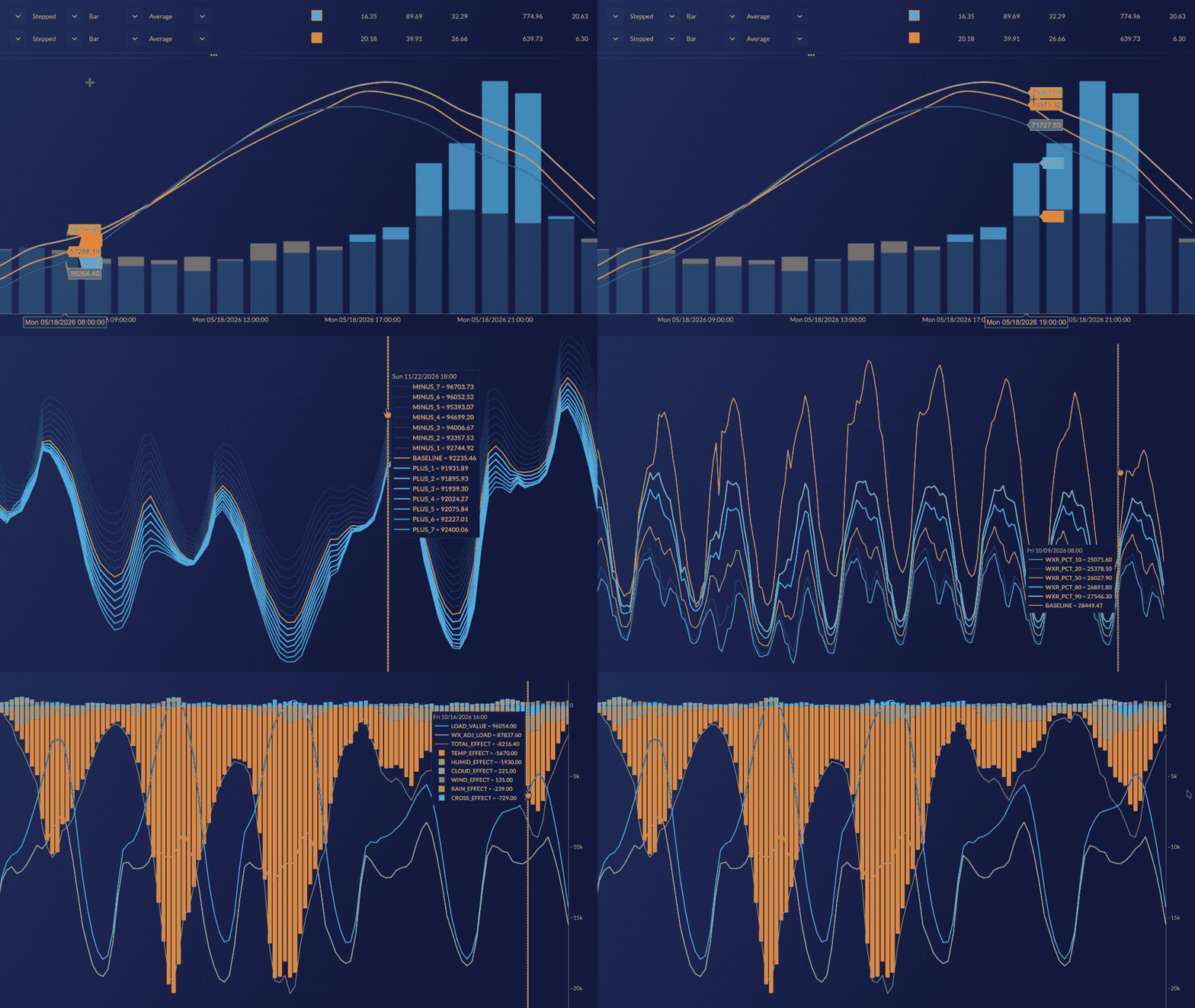
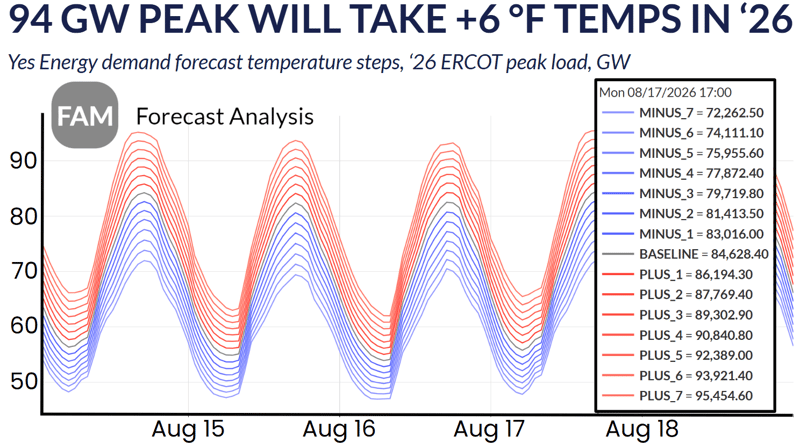
Yes Energy’s methodology combines proprietary non-linear regression and AI/ML models , designed to draw on the strengths of both. Analysts maintain and adjust the models continuously, so there is always a human behind the numbers. Yes Energy provides transparency into the weather, calendar, and market drivers behind every forecast so you can understand and validate your decisions. Advanced analysis tools like weather risk and temperature steps provide a deeper level of analysis to support confident, informed decisions.
What is load forecasting software?
Load forecasting software predicts how much electricity a market, zone, or utility will need, usually hour by hour, using weather, calendar, and historical load data. Utilities use it to plan supply and avoid penalties, and traders use it to anticipate prices and grid conditions. Yes Energy's load forecasting software combines an advanced regression model with analyst review to perform on extreme weather days and holidays.
What is short-term load forecasting?
Short-term load forecasting predicts electricity demand from the next hour out to about two weeks ahead. It drives day-ahead and real-time decisions such as bidding, unit commitment, and battery dispatch. Yes Energy's short-term load forecasts cover a 14-day horizon and update hourly in North America and Europe and half-hourly in APAC.
How do you choose the best load forecasting software?
Look at accuracy on the days that matter most, like extreme heat, extreme cold, and holidays, not just average error. Ask for statistics such as RMSE, win rate, and bias against the ISO forecast, and check whether analysts can explain why a forecast looks the way it does. Coverage of your markets, update frequency, and delivery by API or cloud also matter.